Showing posts with label Books. Show all posts

Sunday, July 31, 2016

Bad Science

Last week I read two books that were so good I feel like they should be required reading in school. One was named Bad Science, by Ben Goldacre, and the other was Do You Believe in Magic?, by Paul Offit.


Bad Science's description: "Have you ever wondered how one day the media can assert that alcohol is bad for us and the next unashamedly run a story touting the benefits of daily alcohol consumption? Or how a drug that is pulled off the market for causing heart attacks ever got approved in the first place? How can average readers, who aren't medical doctors or Ph.D.s in biochemistry, tell what they should be paying attention to and what's, well, just more BS?"

"Ben Goldacre has made a point of exposing quack doctors and nutritionists, bogus credentialing programs, and biased scientific studies. He has also taken the media to task for its willingness to throw facts and proof out the window. But he's not here just to tell you what's wrong. Goldacre is here to teach you how to evaluate placebo effects, double-blind studies, and sample sizes, so that you can recognize bad science when you see it. You're about to feel a whole lot better."


Do You Believe in Magic?'s description: "In Do You Believe in Magic?, medical expert Paul A. Offit, M.D., offers a scathing exposé of the alternative medicine industry, revealing how even though some popular therapies are remarkably helpful due to the placebo response, many of them are ineffective, expensive, and even deadly."

"Dr. Offit reveals how alternative medicine—an unregulated industry under no legal obligation to prove its claims or admit its risks—can actually be harmful to our health."

"An outspoken advocate for science-based health advocacy who is not afraid to take on media celebrities who promote alternative practices, Dr. Offit advises, 'There’s no such thing as alternative medicine. There’s only medicine that works and medicine that doesn’t.'"

I really loved both of these books. They were easy to read, and fascinating.

Both explain why you should critically examine health claims made by those in the media, and how to critically examine them. Both were fascinating, fun to read, and full of crazy stuff that's ignored or misunderstood by the media. For example, did you know that antioxidant supplements not only have been found to have no benefit, but actually increase your chance of dying from cancer or heart disease? I had no idea.

I highly recommend them if you'd like to have the ability to be able to critically examine health, medical, or science claims made by those on the news, podcasts, blogs, news websites, etc.

Sunday, January 3, 2016

2015 Book List

Well, I only read about half as many books in 2015 as I did in 2014, but that's okay. I plan to read a lot more this year. I made a list today of books I want to read and am excited to get started on it.

There is one book that I feel like reading this year was a real accomplishment - Don Quixote. I wanted to read it before our trip to Spain, and I'm really glad I did. It was a great, clever, funny book. I listened to it on LibriVox - a site where you can listen to free audio books (that are all in the public domain). It took me a very long time to listen to all of it - like a whole month. I listened to all of Volume 1, which was published in 1605. There is still all of Volume 2 (published in 1605) for me to listen to, which I feel will be kind of hard work (like the first one was), but just as rewarding.

The books I read in 2015 were:

- Rogue Knight (Five Kingdoms) by Brandon Mull
- 13 Suspicious Incidents by Lemony Snicket
- "Shouldn't You Be in School?" by Lemony Snicket
- The Name of This Book is Secret by Pseudonymous Bosch
- If You're Reading This, It's Too Late by Pseudonymous Bosch
- This Book is Not Good for You by Pseudonymous Bosch
- This Isn't What It Looks Like by Pseudonymous Bosch
- You Have to Stop This by Pseudonymous Bosch
- 123 Magic by Thomas W. Phelan
- Don Quixote, Volume 1 by Miguel De Cervantes, translated by John Ormsby
- Harry Potter and the Sorcerer's Stone by J.K. Rowling (reread)
- Harry Potter and the Chamber of Secrets by J.K. Rowling (reread)
- The Fault in Our Stars by John Green
- Steve and I by Terri Irwin
- The Secret Garden by Frances Hodgson Burnett
- The Princess Bride by William Goldman
- Winnie the Pooh by A.A. Milne
- The Diary of Anne Frank by Anne Frank
- Entwined by Heather Dixon
- Bad Magic by Pseudonymous Bosch
- The One and Only Ivan by Katherine Applegate
- The Sword of Summer (Magnus Chase and the Gods of Asgard) by Rick Riordan
- Harry Potter and the Prisoner of Azkaban by J.K. Rowling (reread)
- A Little Princess by Frances Hodgson Burnett 
- Percy Jackson's Greek Heroes by Rick Riordan
- Crystal Keepers (Five Kingdoms) by Brandon Mull

Looking over this list, I really like most of the books I read this year. All of the Brandon Mull and Rick Riordan ones were great. Lemony Snicket was good ol' Lemony Snicket. The Pseudonymous Bosch ones were all pretty kid-ish, but amusing reads nonetheless. Don Quixote was awesome. Winnie the Pooh was delightful. Entwined was one I just found on the shelf of the library that turned out to be a surprise favorite (it's a retelling of the fairy tale "The Twelve Dancing Princesses").

I read "The Secret Garden" and "A Little Princess" for the first times this year. I've seen the movies of course, and it was really interesting to see how they compare. To be honest, I don't really like The Secret Garden movie, but (surprise, surprise!) the book was way better. I still like the A Little Princess movie better than the book, but the book was good too. The thing that surprised me most with that book was that the book and the movie had two different overall messages - the movie's message is about how we all have inherent worth; the book's message was about always trying to do the right thing even in hard circumstances. Both are good messages.

So yeah! That's what I read this last year. :)

Tuesday, December 30, 2014

2014 Book List

The books I read this year are:

- The Hobbit by J.R. Tolkien (reread)
- The Arcade Catastrophe by Brandon Mull
- The Lost Hero by Rick Riordan (reread)
- The Son of Neptune by Rick Riordan (reread)
- The Mark of Athena by Rick Riordan (reread)
- The House of Hades by Rick Riordan
- The Crown of Embers by Rae Carson
- The Bitter Kingdom by Rae Carson
- Enter the Zombie by David Lubar
- Eulalia! by Brian Jacques
- Artemis Fowl, The Last Guardian by Eoin Colfer
- Divergent by Victoria Roth
- It's All Too Much by Peter Walsh (reread)
- Goliath by Scott Westerfield
- The $1000 Challenge by Brian J. O'Connor
- The Clutter Cure by Judi Culbertson
- Family Inc. by Andrew and Caitlin Friedman
- Insurgent by Victoria Roth
- Allegiant by Victoria Roth
- City of Bones by Cassandra Clare
- City of Ashes by Cassandra Clare
- City of Glass by Cassandra Clare
- Where Did You See Her Last? by Lemony Snicket
- City of Fallen Angels by Cassandra Clare
- City of Lost Souls by Cassandra Clare
- City of Heavenly Fire by Cassandra Clare
- Brain on Fire by Susannah Cahalan
- Mindless Eating by Brian Wansink
- The Book of Mormon (reread)
- David & Goliath by Malcolm Gladwell
- Don't Panic, Dinner's in the Freezer by Martinez, Howell, and Garcia
- Five Kingdoms (Sky Raiders) by Brandon Mull
- Heart of a Samurai by Margi Preus
- Peter and the Starcatchers by Dave Barry & Ridley Pearson
- Anne of Green Gables by L.M. Montgomery
- The School for Good and Evil by Soman Chainani 
- The School for Good and Evil - A World Without Princes by Soman Chainani 
- The Secret Zoo by Bryan Chick
- The Land of Stories by Chris Colfer
- Anne of Avonlea by L.M. Montgomery
- Anne of the Island by L.M. Montgomery
- Anne of Windy Poplars by L.M. Montgomery
- The Blood of Olympus by Rick Riordan
- Anne's House of Dreams by L.M. Montgomery
- Anne of Ingleside by L.M. Montgomery
- Rainbow Valley by L.M. Montgomery
- Rilla of Ingleside by L.M. Montgomery
- Jasotron 2012 by Bill Amend

My favorite new books that I read were the whole Anne of Green Gable series by L.M. Montgomery, The House of Hades and The Blood of Olympus (final two of the Heroes of Olympus series) by Rick Riordan, Mindless Eating by Brian Wansink, and Five Kingdoms - Sky Raiders by Brandon Mull. 

Monday, December 8, 2014

Rilla of Ingleside: Abridged vs. Unabridged

I finished reading Rilla of Ingleside by L.M. Montgomery this week. It's the last book in the Anne of Green Gable series, and I loved it. I think it's one of the very best in the whole series.

When I went to go rate it on Goodreads, I noticed someone's comment that "It was recently drawn to my attention by a fellow Goodreads reader that the editions of Rilla of Ingleside, for which we had become accustomed, are abridged versions of the original edition that L.M. Montgomery published. Somehow along the way, an abridged edition appeared through an American publishing house and that abridged version became the standard (accidentally)." 

I was like, "Whaaaaaat?" and investigated further. And it turns out this is true! The book I borrowed from the library, a Bantam Book published by HarperCollins Publishers in 1992, and which claims that "This edition contains the complete text of the original hardcover edition; Not one word has been omitted," is abridged. 
One of the abridged versions

A new, "restored" version of Rilla of Ingleside was published by Viking Canada in 2010, and the editors explained in this interview how the abridged version of Rilla came to be the standard book on the shelves, masquerading as the unabridged original: 

"This new edition of Rilla of Ingleside includes the tag “A new, unabridged and fully restored edition” on the cover. What does this mean?
In the 1970s, a reprint edition of Rilla of Ingleside silently cut 4,500 words, or 4% of the original text (to put it another way, that’s fourteen pages of text that are missing). That edition was reprinted by Bantam-Seal in the 1980s and remains in print today. This new edition restores the full text of the original edition, published in 1921.

What types of material were cut?
There doesn’t seem to be a clear pattern of deletions: some pertain simply to adverbs that are no longer in general use (verily, ignominiously), whereas others involve entire scenes that have been excised. Most of the cuts occur in the first half of the book, which indicates that the abridgment was done primarily for length. Most of the cuts seem fairly arbitrary."

This other page explains the same thing: "A later reprint of Rilla of Ingleside silently abridged the text by 4,500 words, and it is this text that has been available to North American readers since the 1980s. A restored, unabridged, and annotated edition, edited by Benjamin Lefebvre and Andrea McKenzie, was published by Viking Canada in October 2010. It contains the full text of Virna Sheard’s poem “The Young Knights,” which Montgomery excerpted as her epigraph."

The new, unabridged version

So, I went looking for the differences in the abridged vs. original text. I wanted to read the 4,500 words that I had missed when reading the abridged version. But I couldn't find a single comparison online! It appears that one person did do a comparison a couple years ago, but the link is now broken and the webpage doesn't exist anymore.

Soooo, I went through and compared the abridged Bantam Book copy of Rilla of Ingleside I have with the free, unabridged Project Gutenberg copy of Rilla of Ingleside. I didn't find all the words that were cut, but I did find about 3,600 of them. Definitely all the big passages, and a whole bunch of the little ones. *If anyone reading this has found more of the differences, please feel free to post them in a comment!* I've compiled them below, for anyone that mind find them useful!


Rilla of Ingleside: Abridged vs Unabridged Text

Bantam Page Number Abridged Text Original Text
4 "...chasing him out of her domain..." "...chasing him ignominiously out of her domain..."
5 "He would do anything for Jem, I believe." "He would do anything for Jem, I verily believe."
12 She was not pretty but there was a certain charm of interest and mystery in her face. She was not pretty but there was a certain charm of interest and mystery in her face, and Rilla found her fascinating.
12 At all other times she was a stimulating companion. At all other times she was a stimulating companion, and the gay set at Ingleside never remembered that she was so much older than themselves.
13 She knew that Rilla longed to be "out"—to go to parties as Nan and Di did, and to have dainty evening dresses and—beaux! She knew that Rilla longed to be "out"—to go to parties as Nan and Di did, and to have dainty evening dresses and—yes, there is no mincing matters—beaux!
13 Walter was, as ever, the handsomest of the Ingleside boys. Walter was, as ever, the handsomest of the Ingleside boys. Miss Oliver found pleasure in looking at him for his good looks—he was so exactly like what she would have liked her own son to be.
13 That sonnet sequence was really a remarkable thing for a lad of twenty to write. That sonnet sequence was really a remarkable thing for a lad of twenty to write. Miss Oliver was no partial critic and she knew that Walter Blythe had a wonderful gift.
15 Everybody at Ingleside was fond of him, even Susan. Everybody at Ingleside was fond of him, even Susan, although his one unfortunate propensity of sneaking into the spare room and going to sleep on the bed tried her affection sorely.
23 A little girl indeed! She whisked out of the kitchen in high dudgeon. Her spirits rose again when she found herself one of the gay crowd bound for the Four Winds light. A little girl indeed! She whisked out of the kitchen in high dudgeon. Another time she wouldn't go down to show herself off to Susan—Susan, who thought nobody was grown up until she was sixty! And that horrid Cousin Sophia with her digs about freckles and legs! What business had an old—an old beanpole like that to talk of anybody else being long and thin? Rilla felt all her pleasure in herself and her evening clouded and spoiled. The very teeth of her soul were set on edge and she could have sat down and cried.

But later on her spirits rose again when she found herself one of the gay crowd bound for the Four Winds light.
25 The gulf beyond was still silvery blue in the afterlight. Rilla loved life. She was going to have a splendid time. The gulf beyond was still silvery blue in the afterlight. Oh, it was all glorious—the clear air with its salt tang, the balsam of the firs, the laughter of her friends. Rilla loved life—its bloom and brilliance; she loved the ripple of music, the hum of merry conversation; she wanted to walk on forever over this road of silver and shadow. It was her first party and she was going to have a splendid time.
32 Rilla looked about her and thought how lovely her first party had been. She would never forget it. Rilla looked about her and thought how lovely her first party had been. She would never forget it. The room re-echoed to laughter and jest. Beautiful young eyes sparkled and shone. From the pavilion outside came the lilt of the fiddle and the rhythmic steps of the dancers.
32 Why didn't Jack Elliott speak—if he had anything to tell? Why didn't Jack Elliott speak—if he had anything to tell? Why did he just stand there, glowering importantly?
34 Walter Blythe was always saying odd things. Walter Blythe was always saying odd things. That old Piper of his—she hadn't heard anything about him since their playdays in Rainbow Valley—and now here he was bobbing up again. She didn't like it, and that was the long and short of it.
35 It does not do to laugh at the pangs of youth. They are very terrible because youth has not yet learned that "this, too, will pass away." It does not do to laugh at the pangs of youth. They are very terrible because youth has not yet learned that "this, too, will pass away." Rilla sighed and wished she were home, in bed, crying into her pillow.
36 Why, for mercy's sake, did boys try to dance who didn't know the first thing about dancing; and who had feet as big as boats? Why, for mercy's sake, did boys try to dance who didn't know the first thing about dancing; and who had feet as big as boats? There, he had bumped her into somebody! She would never dance with him again!
41 Susan sat as if paralysed, her piece of pie half-eaten on her plate. Susan sat as if paralysed, her piece of pie half-eaten on her plate. Susan never did finish that piece of pie—a fact which bore eloquent testimony to the upheaval in her inner woman for Susan considered it a cardinal offence against civilized society to begin to eat anything and not finish it. That was wilful waste, hens to the contrary notwithstanding.
43 "Your father says it will be over in a few months and I have as much faith in his opinion as I have in Lord Anybody's." "Your father says it will be over in a few months and I have as much faith in his opinion as I have in Lord Anybody's. So just let us be calm and trust in the Almighty and get this place tidied up. I am done with crying which is a waste of time and discourages everybody."
49 "Amen to that," nodded Mrs. Norman. "Bat-blind as most of them were somebody had foresight enough to see to that." "Amen to that," nodded Mrs. Norman. "Bat-blind as most of them were somebody had foresight enough to see to that."

 "Maybe England'll manage not to get into trouble over it," said Cousin Sophia plaintively. "I dunno. But I'm much afraid."

"One would suppose that England was in trouble over it already, up to her neck, Sophia Crawford," said Susan. "But your ways of thinking are beyond me and always were. It is my opinion that the British Navy will settle Germany in a jiffy and that we are all getting worked up over nothing."

Susan spat out the words as if she wanted to convince herself more than anybody else. She had her little store of homely philosophies to guide her through life, but she had nothing to buckler her against the thunderbolts of the week that had just passed. What had an honest, hard-working, Presbyterian old maid of Glen St. Mary to do with a war thousands of miles away? Susan felt that it was indecent that she should have to be disturbed by it.
50 "Don't you tell me one Britisher isn't a match for ten foreigners." "Don't you tell me one Britisher isn't a match for ten foreigners. I could polish off a dozen of 'em myself with both hands tied behind my back!"
50 "They've a kind of presentiment that it wouldn't be healthy for their complaint." "Lord love you, they've a kind of presentiment, so to speak, that it wouldn't be healthy for their complaint."
54 "Even the old cat at the manse has passed away." "Even the old cat at the manse has passed away. He breathed his last at a quarter to ten last night and Bruce is quite heart-broken, they tell me. It's time that pussy went where good cats go. He must be at least fifteen years old. He has seemed so lonely since Aunt Martha died."
54 "Ellen West used to be always railing at the Kaiser and we thought her crazy, but now I see that there was a method in her madness." "Ellen West used to be always railing at the Kaiser and we thought her crazy, but now I see that there was a method in her madness. This tray is packed, Mrs. Dr. dear, and I will go down and put in my best licks preparing supper. I wish I knew when I would cook another supper for Jem but such things are hidden from our eyes."
55 "The beast has more sense than most humans," said Mary Vance. "The beast has more sense than most humans," said Mary Vance. "Well, did we any of us ever think we'd live to see this day? I bawled all night to think of Jem and Jerry going like this. I think they're plumb deranged."
56 "Let them European nations fight it out between them," said Abner Reese. "Let them European nations fight it out between them," said Abner Reese.

 "When he was a boy I gave him many a good trouncing," shouted Norman Douglas, who seemed to be referring to some one high in military circles in Charlottetown. "Yes, sir, I walloped him well, big gun as he is now."
57 Rilla felt as if she were in some fantastic nightmare. Rilla felt as if she were in some fantastic nightmare. Were these the people who, three weeks ago, were talking of crops and prices and local gossip?
57 Nothing to do now but to go home—and wait. Nothing to do now but to go home—and wait. The doctor and Mrs. Blythe walked off together—so did Nan and Faith—so did John Meredith and Rosemary. Walter and Una and Shirley and Di and Carl and Rilla went in a group. Susan had put her bonnet back on her head, hindside foremost, and stalked grimly off alone.
61 Her first impulse was to turn and flee. But that would not do. Rilla's first impulse was to turn and flee. But that would never do.
61 "You're the doctor's miss, ain't ye?" "You're the doctor's miss, ain't ye? Have a cheer?"

 Rilla did not see any chair which was not cluttered with something. She remained standing.
62 Yet a feeling of pity for the desolate, orphaned mite took sudden possession of her. Yet a feeling of pity for the desolate, orphaned mite which had "come out of the everywhere" into such a dubious "here", took sudden possession of her.
62 "I ain't a-going to trouble myself with it, I can tell yez. I told Min it'd have to be sent to an orphan asylum till we'd see if Jim ever came back to look after it. She didn't relish the idee." "I ain't a-going to trouble myself with it, I can tell yez. I brung up a boy that my sister left and he skinned out as soon as he got to be some good and won't give me a mite o' help in my old age, ungrateful whelp as he is. I told Min it'd have to be sent to an orphan asylum till we'd see if Jim ever came back to look after it. Would yez believe it, she didn't relish the idee."
62 "I hadn't time—took me all the time there was looking after Min." "I hadn't time—took me all the time there was looking after Min. 'Sides, as I told yez, I don't know nithing about kids."
63 "Sure, if yez wants to," said Mrs. Conover amiably. "Sure, if yez wants to," said Mrs. Conover amiably. "I hain't any objection. Take it and welcome."
64 "Better not let the wind blow on it," admonished Mrs. Conover. "Take its breath if it do." "Better not let the wind blow on it," admonished Mrs. Conover. "Take its breath if it do."

Rilla wrapped the tattered little quilt around the soup tureen.

"Will you hand this to me after I get into the buggy, please?"

"Sure I will," said Mrs. Conover, getting up with a grunt.
71 "...lies down patiently to wait for the next train. One day some boys threw stones at Monday and old Johnny Mead, who never was known to take notice of anything before, snatched up a meat axe in the butcher's shop and chased them through the village." "...lies down patiently to wait for the next train. Mr. Gray, the station master, says there are times when he can hardly help crying from sheer sympathy. One day some boys threw stones at Monday and old Johnny Mead, who never was known to take notice of anything before, snatched up a meat axe in the butcher's shop and chased them through the village. Nobody has molested Monday since."
76 "Business as usual is England's motto, they tell me, Mrs. Dr. dear, and I have taken it for mine." "Business as usual is England's motto, they tell me, Mrs. Dr. dear, and I have taken it for mine, not thinking I could easily find a better. I shall make the same kind of pudding today I always make on Saturday. It is a good deal of trouble to make, and that is well, for it will employ my thoughts."
76 "A sock a day is my allowance." "A sock a day is my allowance. Old Mrs. Albert Mead of Harbour Head manages a pair and a half a day but she has nothing to do but knit. You know, Mrs. Dr. dear, she has been bed-rid for years and she has been worrying terrible because she was no good to anybody and a dreadful expense, and yet could not die and be out of the way. And now they tell me she is quite chirked up and resigned to living because there is something she can do, and she knits for the soldiers from daylight to dark."
76 "And they say Joe Milgrave would too, only he is afraid that if he does that Whiskers-on-the-moon will not let him have Miranda." "And they say Joe Milgrave would too, only he is afraid that if he does that Whiskers-on-the-moon will not let him have Miranda. Whiskers says that he will believe the stories of German atrocities when he sees them, and that it is a good thing that Rangs Cathedral has been destroyed because it was a Roman Catholic church. Now, I am not a Roman Catholic, Mrs. Dr. dear, being born and bred a good Presbyterian and meaning to live and die one, but I maintain that the Catholics have as good a right to their churches as we have to ours and that the Huns had no kind of business to destroy them. Just think, Mrs. Dr. dear," concluded Susan pathetically, "how we would feel if a German shell knocked down the spire of our church here in the glen, and I'm sure it is every bit as bad to think of Rangs cathedral being hammered to pieces."

And, meanwhile, everywhere, the lads of the world rich and poor, low and high, white and brown, were following the Piper's call.
76 "I don't believe I could bear another parting from him." "I don't believe I could bear another parting from him—now that I know the war will not be over as soon as we hoped when he left first."
78 "I have always said that the devil was in him and that I will tie to."

Susan opened the door and looked in.
"I have always said that the devil was in him and that I will tie to."

"It is my opinion that the cat has hydrophobia," said Cousin Sophia solemnly. "I once heard of a cat that went mad and bit three people—and they all died a most terrible death, and turned black as ink."

Undismayed by this, Susan opened the door and looked in.
79 Anything like Doc's shrieks while the process was going on was never heard at Ingleside. Anything like Doc's shrieks while the process was going on was never heard at Ingleside. Susan was in mortal dread that the Albert Crawfords would hear it and conclude she was torturing the creature to death.
79 "The Huns themselves couldn't have worked more havoc here," she said bitterly. "The Huns themselves couldn't have worked more havoc here," she said bitterly. "But when people will keep a Satanic animal like that, in spite of all warnings, they cannot complain when their wedding bowls get broken."
80 "I must take up my knitting then and knit hard till the papers come, Mrs. Dr. dear." "I must take up my knitting then and knit hard till the papers come, Mrs. Dr. dear. Knitting is something you can do, even when your heart is going like a trip-hammer and the pit of your stomach feels all gone and your thoughts are catawampus."
80 "...the Kaiser will not eat his Christmas dinner in London this year." "...the Kaiser will not eat his Christmas dinner in London this year. Do you know, Mrs. Dr. dear,"—Susan's voice lowered as a token that she was going to impart a very shocking piece of information,—"I have been told on good authority—or else you may be sure I would not be repeating it when it concerns a minster—that the Rev. Mr. Arnold goes to Charlottetown every week and takes a Turkish bath for his rheumatism. The idea of him doing that when we are at war with Turkey? One of his own deacons has always insisted that Mr. Arnold's theology was not sound and I am beginning to believe that there is some reason to fear it."
83 "When I wake up in the night and cannot go to sleep again," remarked Susan, who was knitting and reading at the same time, "I pass the moments by torturing the Kaiser to death. Last night I fried him in boiling oil and a great comfort it was to me, remembering those Belgian babies." "When I wake up in the night and cannot go to sleep again," remarked Susan, who was knitting and reading at the same time, "I pass the moments by torturing the Kaiser to death. Last night I fried him in boiling oil and a great comfort it was to me, remembering those Belgian babies."

"If the Kaiser were here and had a pain in his shoulder you'd be the first to run for the liniment bottle to rub him down," laughed Miss Oliver.

"Would I?" cried outraged Susan. "Would I, Miss Oliver? I would rub him down with coal oil, Miss Oliver—and leave it to blister. That is what I would do and that you may tie to. A pain in his shoulder, indeed! He will have pains all over him before he is through with what he has started."
83 "I dare say the Austrians and Russians would think Saskatchewan and Musquodoboit about as bad, Susan," said Miss Oliver. "I dare say the Austrians and Russians would think Saskatchewan and Musquodoboit about as bad, Susan," said Miss Oliver. "The Serbians have done wonderfully of late. They have captured Belgrade."

"And sent the Austrian creatures packing across the Danube with a flea in their ear," said Susan with a relish, as she settled down to examine a map of Eastern Europe, prodding each locality with the knitting needle to brand it on her memory. "Cousin Sophia said awhile ago that Serbia was done for, but I told her there was still such a thing as an over-ruling Providence, doubt it who might. It says here that the slaughter was terrible. For all they were foreigners it is awful to think of so many men being killed, Mrs. Dr. dear—for they are scarce enough as it is."
84 "When mother saw the hat and the tag she just looked at me. Mother is some expert at looking." "When mother saw the hat and the tag she just looked at me. Mother is some expert at looking. Father says she looked him into love with her years ago in Avonlea school and I can well believe it—though I have heard a weird tale of her banging him over the head with a slate at the very beginning of their acquaintance. Mother was a limb when she was a little girl, I understand, and even up to the time when Jem went away she was full of ginger. But let me return to my mutton—that is to say, my new green velvet hat."
86 "All the girls have always said Irene was jealous-minded and I would never believe them before." "All the girls have always said Irene was jealous-minded and I would never believe them before. But now I feel that perhaps she is."
89 "He is not quite such a nuisance as he was; he has got some backbone and can sit up quite nicely, and he loves his bath now and splashes unsmilingly in the water instead of twisting and shrieking." "He is not quite such a nuisance as he was; he has got some backbone and can sit up quite nicely, and he loves his bath now and splashes unsmilingly in the water instead of twisting and shrieking. Oh, shall I ever forget those first two months! I don't know how I lived through them. But here I am and here is Jims and we both are going to 'carry on.'"
91 "I do not believe—I know. That does not worry me. We must just trust in God and make big guns." "I do not believe—I know. That does not worry me. What does worry me is the trouble and expense of it all. But then you cannot make omelets without breaking eggs, so we must just trust in God and make big guns."
91 "'Big guns are good but the Almighty is better, and He is on our side, no matter what the Kaiser says about it.'" "'Big guns are good but the Almighty is better, and He is on our side, no matter what the Kaiser says about it.' I would have gone crazy many a day lately, Miss Oliver, dear, if I had not sat tight and repeated that to myself."
91 "...I was not flippant, Miss Oliver, dear, only calm and confident in the British navy and our Canadian boys."

"I hate going to bed now," said Mrs. Blythe.
"...I was not flippant, Miss Oliver, dear, only calm and confident in the British navy and our Canadian boys. I am like old Mr. William Pollock of the Harbour Head. He is very old and has been ill for a long time, and one night last week he was so low that his daughter-in-law whispered to some one that she thought he was dead. 'Darn it, I ain't,' he called right out—only, Miss Oliver, dear, he did not use so mild a word as 'darn'—'darn it, I ain't, and I don't mean to die until the Kaiser is well licked.' Now, that, Miss Oliver, dear," concluded Susan, "is the kind of spirit I admire."

"I admire it but I can't emulate it," sighed Gertrude. "Before this, I have always been able to escape from the hard things of life for a little while by going into dreamland, and coming back like a giant refreshed. But I can't escape from this."

"Nor I," said Mrs. Blythe. "I hate going to bed now."
95 "...I cannot console myself with the thought that the tales are not true." "...I cannot console myself with the thought that the tales are not true. When I read a novel that makes me want to weep I just say severely to myself, 'Now, Susan Baker, you know that is all a pack of lies.'"
95 "Now that he has enlisted she wishes she had never said a word to him." "Now that he has enlisted she wishes she had never said a word to him. You know Josiah Cooper and William Daley, Mrs. Dr. dear. They used to be fast friends but they quarrelled twenty years ago and have never spoken since. Well, the other day Josiah went to William and said right out, 'Let us be friends. 'Tain't any time to be holding grudges.' William was real glad and held out his hand, and they sat down for a good talk. And in less than half an hour they had quarrelled again, over how the war ought to be fought, Josiah holding that the Dardanelles expedition was rank folly and William maintaining that it was the one sensible thing the Allies had done. And now they are madder at each other than ever and William says Josiah is as bad a pro-German as Whiskers-on-the-Moon."
103 "I hope he will not let his mother hear him talking like that." "I hope he will not let his mother hear him talking like that," she thought as she stacked the hoes and rake away.
121 "I only know that it seems they do have to go, unless we all want to be Kaiserised." "I only know that it seems they do have to go, unless we all want to be Kaiserised—for I can assure you that the Monroe doctrine, whatever it is, is nothing to tie to, with Woodrow Wilson behind it. The Huns, Dr. dear, will never be brought to book by notes."
136 "...she was well-known to be a heedless creature." "...she was well-known to be a heedless creature. One day she found a nest of five eggs as she was going across the fields to church with a brand new blue silk dress on. So she put them in the pocket of her petticoat and when she got to church she forgot all about them and sat down on them and her dress was ruined, not to speak of the petticoat. Let me see—would not Tod be some relation of yours? Your great grandmother West was a MacAllister. Her brother Amos was a MacDonaldite in religion. I am told he used to take the jerks something fearful. But you look more like your great grandfather West than the MacAllisters. He died of a paralytic stroke quite early in life."
141 "Do not let yourself slump like poor Cousin Sophia." "Do not let yourself slump like poor Cousin Sophia. She said, when the word came, 'Ah, it is nothing but a rift in the clouds. We are up this week but we will be down the next.' 'Well, Sophia Crawford,' said I,—for I will never give in to her, Mrs. Dr. dear—'God himself cannot make two hills without a hollow between them, as I have heard it said, but that is no reason why we should not take the good of the hills when we are on them.' But Cousin Sophia moaned on. 'Here is the Gallipolly expedition a failure and the Grand Duke Nicholas sent off, and everyone knows the Czar of Rooshia is a pro-German and the Allies have no ammunition and Bulgaria is going against us. And the end is not yet, for England and France must be punished for their deadly sins until they repent in sackcloth and ashes.' 'I think myself,' I said, 'that they will do their repenting in khaki and trench mud, and it seems to me that the Huns should have a few sins to repent of also.' 'They are instruments in the hands of the Almighty, to purge the garner,' said Sophia. And then I got mad, Mrs. Dr. dear, and told her I did not and never would believe that the Almighty ever took such dirty instruments in hand for any purpose whatever, and that I did not consider it decent for her to be using the words of Holy Writ as glibly as she was doing in ordinary conversation. She was not, I told her, a minister or even an elder. And for the time being I squelched her, Mrs. Dr. dear. Cousin Sophia has no spirit. She is very different from her niece, Mrs. Dean Crawford over-harbour. You know the Dean Crawfords had five boys and now the new baby is another boy. All the connection and especially Dean Crawford were much disappointed because their hearts had been set on a girl; but Mrs. Dean just laughed and said, 'Everywhere I went this summer I saw the sign "MEN WANTED" staring me in the face. Do you think I could go and have a girl under such circumstances?' There is spirit for you, Mrs. Dr. dear. But Cousin Sophia would say the child was just so much more cannon fodder."
143 "...when they get it into their heads that this war is not a correspondence school." "...when they get it into their heads that this war is not a correspondence school. They will not," said Susan, energetically waving a saucepan with one hand and a soup ladle with the other, "be too proud to fight then."
152 Cousin Sophia was also there, knitting. Cousin Sophia was also there, knitting. All the boys were going to be killed in the long run, so Cousin Sophia felt in her bones, but they might better die with warm feet than cold ones, so Cousin Sophia knitted faithfully and gloomily.
153 "I must be getting old, Gilbert." Mrs. Blythe laughed a trifle ruefully. "People are beginning to tell me I look so young. They never tell you that when you are young. But I shall not worry over my silver thread. I never liked red hair." "I must be getting old, Gilbert." Mrs. Blythe laughed a trifle ruefully. "People are beginning to tell me I look so young. They never tell you that when you are young. But I shall not worry over my silver thread. I never liked red hair. Gilbert, did I ever tell you of that time, years ago at Green Gables, when I dyed my hair? Nobody but Marilla and I knew about it."

"Was that the reason you came out once with your hair shingled to the bone?"

"Yes. I bought a bottle of dye from a German Jew pedlar. I fondly expected it would turn my hair black—and it turned it green. So it had to be cut off."

"You had a narrow escape, Mrs. Dr. dear," exclaimed Susan. "Of course you were too young then to know what a German was. It was a special mercy of Providence that it was only green dye and not poison."

"It seems hundreds of years since those Green Gables days," sighed Mrs. Blythe. "They belonged to another world altogether. Life has been cut in two by the chasm of war. What is ahead I don't know—but it can't be a bit like the past. I wonder if those of us who have lived half our lives in the old world will ever feel wholly at home in the new."
164 There were days when they waited in despair for the end as foot by foot the Germans crept nearer and nearer to the grim barrier of desperate France. There were days when they waited in despair for the end as foot by foot the Germans crept nearer and nearer to the grim barrier of desperate France.

Susan's deeds were in her spotless kitchen at Ingleside, but her thoughts were on the hills around Verdun. "Mrs. Dr. dear," she would stick her head in at Mrs. Blythe's door the last thing at night to remark, "I do hope the French have hung onto the Crow's Wood today," and she woke at dawn to wonder if Dead Man's Hill—surely named by some prophet—was still held by the "poyloos." Susan could have drawn a map of the country around Verdun that would have satisfied a chief of staff.
183 "The Huns have not got all the cleverness in the world." "The Huns have not got all the cleverness in the world. Have you not heard the story of Alistair MacCallum's son Roderick, from the Upper Glen? He is a prisoner in Germany and his mother got a letter from him last week. He wrote that he was being very kindly treated and that all the prisoners had plenty of food and so on, till you would have supposed everything was lovely. But when he signed his name, right in between Roderick and MacCallum, he wrote two Gaelic words that meant 'all lies' and the German censor did not understand Gaelic and thought it was all part of Roddy's name. So he let it pass, never dreaming how he was diddled."
191 "...and Rainbow Valley a haunt of delight with wild asters blowing all over it—our old 'farewell-summers.'" "...and Rainbow Valley a haunt of delight with wild asters blowing all over it—our old 'farewell-summers.' I always liked that name better than 'aster'—it was a poem in itself."
207 "But I will not forget myself again." "But I will not forget myself again. Only if things do not go as smoothly in the kitchen for a few days I hope you will make due allowance for me."
212 The aeroplane soared and dipped and circled, and soared again, until it became a mere speck far over the sunset hills. The aeroplane soared and dipped and circled, and soared again, until it became a mere speck far over the sunset hills.

"'With the majesty of pinion Which the Theban eagles bear Sailing with supreme dominion Through the azure fields of air.'" quoted Anne Blythe dreamily.
213 "...he had a wild desire to get back home to the old planet and the companionship of fellow creatures. "...he had a wild desire to get back home to the old planet and the companionship of fellow creatures. He soon got over that feeling, but he says his first flight alone was a nightmare to him because of that dreadful sensation of ghastly loneliness."
222 "...and such an army cannot be defeated." "'...and such an army cannot be defeated.' No it cannot. We will win in the end. I will not doubt it for one moment. To let myself doubt would be to 'break faith.'"
222 "He may be a pacifist, but he knows a good investment when it is handed out to him." "He may be a pacifist, but he knows a good investment when it is handed out to him. Five and a half per cent is five and a half per cent, even when a militaristic government pays it."
238 "...and gone down to defeat in spite of it." "...and gone down to defeat in spite of it. Ours is 'but one more To baffled millions who have gone before.'"
238 Susan was already planning a new line of defence for the channel ports. Susan was already planning a new line of defence for the channel ports.

"As long as we can hold them," she declared, "the situation is saved. Paris has really no military significance."

"Don't," said Gertrude sharply, as if Susan had run something into her. She thought the old worn phrase 'no military significance' nothing short of ghastly mockery under the circumstances, and more terrible to endure than the voice of despair would have been.
238 "Depend upon it, girls, that part of the message can't be true."

This point of view cheered them all a little, and helped them through the evening.
"Depend upon it, girls, that part of the message can't be true. I'm going to try to try a long-distance call to town myself."

The doctor was no more successful than Rilla had been, but his point of view cheered them all a little, and helped them through the evening.
240 "Is the British navy anchored in those three miles?" demanded Susan scornfully. "Is the British navy anchored in those three miles?" demanded Susan scornfully.

"It is the opinion of a man who knows all about it," said Cousin Sophia solemnly.

"There is no such person," retorted Susan. "As for the military critics, they do not know one blessed thing about it, any more than you or I. They have been mistaken times out of number. Why do you always look on the dark side, Sophia Crawford?"

"Because there ain't any bright side, Susan Baker."

"Oh, is there not? It is the twentieth of April, and Hindy is not in Paris yet, although he said he would be there by April first. Is that not a bright spot at least?"
241 Gertrude shivered with pain. Gertrude shivered with pain. She looked up at the pictures hanging over Rilla's desk and felt a sudden hatred of Mona Lisa's endless smile.

"Will not even this blot it off your face?" she thought savagely.
244 "That is when astronomers think the collision took place which produced this new star." "That is when astronomers think the collision took place which produced this new star. It makes me feel horribly insignificant," she added under her breath.
242 ...they all plucked up heart and courage to carry on, just because a faithful little dog at the Glen station was still watching with unbroken faith for his master to come home. ...they all plucked up heart and courage to carry on, just because a faithful little dog at the Glen station was still watching with unbroken faith for his master to come home. Common sense might scorn—incredulity might mutter "Mere superstition"—but in their hearts the folk of Ingleside stood by their belief that Dog Monday knew.

Thursday, August 21, 2014

Dinner's in the Freezer


As we were getting ready this summer for Jason to start PA school, I really wanted to figure out some kind of meal plan for our family. In California, we were just kind of winging it on a daily basis. We'd look around our kitchen at dinnertime, pick something to cook, and make it. It meant that we had a lot of the same stuff over and over and over, because we just had to work with what we had and it was hard thinking up new stuff on the spot.

Now, we're having different, good food every night. Our current plan is based off two principles: theme nights, and freezer meals.

The theme idea comes from "The Food Nanny." Her blog is down right now, so I can't link to it, but basically she says that each night of the week should have a set theme. Some of her ideas are "Comfort Food Night," "Mexican Night," "Pizza Night," etc. Our theme nights are:

Sunday: Beef or Pork Night
Monday: Chicken Night
Tuesday: Pasta Night
Wednesday: Fish Night
Thursday: Mexican Night
Friday: Chicken Night
Saturday: Soup Night

(Also, you know have you say a word over and over and over it starts not to seem like a real word? Well, all the sudden "night" doesn't look like a real word to me. It's a real word, right?)

The freezer meal part of our plan comes from a conversation I had with my sister Alyse. A little while ago we were talking on the phone, and she mentioned that she'd tried out a cookbook called "Once a Month Cooking." The idea is that you buy all the groceries for a month's worth of dinners all at one time, cook up all the dinners at the same time, freeze them into daily-sized portions in your freezer, and then pull them out when needed. She'd tried it out with two week's worth of meals, and she liked it.

I really liked the sound of that, so I looked up the book on Amazon. The reviews were just okay, so I looked around on Amazon some more, and found "Don't Panic - Dinner's in the Freezer." It was based on the same idea, and had hundreds of great reviews. I really wanted to try it, so I bought it (and as much as I love books, I rarely buy them - I usually get them from the library, or as gifts. If I bought as many books as I read, I'd go broke!) and that's saying something! It came in just a couple days.

As soon as it arrived, I went through it with Jason and we marked all the recipes we thought sounded good. I read the first couple chapters that explain the benefits to freezing meals ahead of time, how to plan multiple meals at once, how to shop, what to do on the "cooking day," how to freeze everything, and what to do on the "serving day."

I've done three (I think?) cooking days since then, and made about two months of dinners in those three cooking sessions. They're all frozen and stored away, in one-dinner-sized portions. Our dinners are now written out and planned until the end of September, based on our theme nights, and all in our freezer ready to go. All we have to do is pull them out of the freezer the night before and put them in our fridge, and then put them in the oven or on the george foreman when it's time to eat!

I really really like how it's working. We've been eating our frozen dinners for weeks now, and they're really yummy and so easy to prepare on the day of. This is a great system, and I'd highly recommend the book "Don't Panic - Dinner's in the Freezer" to anyone who'd want to try the same idea.

Wednesday, August 20, 2014

Some Books I've read Lately

Books. I miss books. I feel like I haven't been reading as many as I used to, and I miss having the feeling that I'm on top of all the new books coming out. I haven't felt like that in a while; I feel like I'm behind in all the books that have come out in the last couple years. And when I say "all the books," I pretty much mean children's books. Because those are the ones I like the most.

I have read a couple lately, though. We went to our new library a couple weeks ago, and it's great. It's a lot smaller than the one we had in California, but it has a really nice children's section with puzzles, hand puppets, a big storytelling area, and of course, tons of books. The adult section's not bad, either.

Here are a couple books that I've read lately:


First off - Brain on Fire: My Month of Madness, by Susannah Cahalan. I already talked about this book in this Captain's Log post, so I won't say too much more about it, other than that it was good. In a nutshell: True story, written by the woman who it happened to. Her body attacked her brain, and she went crazy. Her family took her to the hospital and none of the doctors (some of the best in the nation) could figure out what was happening to her. Then one did. It's really gripping; once I started it I couldn't put it down.

Second - David and Goliath, by Malcolm Gladwell. This is my fifth Malcolm Gladwell book I've read. I did like it, but I like his others better. I felt like as this book went on, he was kind of stretching to fit his examples in his main point. But, it was still really interesting and I particularly enjoyed the chapter on David and Goliath themselves, the chapter on basketball, and the chapter on universities.

Third, and this is probably my favorite of the lot - Mindless Eating, by Brian Wansink, Ph.D. This book was so cool! It's not a diet book, so don't start with that impression of it (although if you apply the principles you learn from it, it can definitely help you eat less). This book is all about the pyschology of eating, written by the guy who's done probably more studies on it than anybody else. It's so cool! He talks about all the different studies they've done, from putting secretaries' candy in a clear bowl vs an opaque bowl, or calling the same food items different names at their fake restaurant, or serving food in bigger containers or smaller containers or more bowls or fewer bowls or with fast music or slow music or all sorts of stuff. It's just really cool, really interesting, and I love the way the book is written. It's written in a totally down-to-earth, funny style. And I love that the person writing it actually knows what he's talking about; he's the one who's done all the studies, for years and years and years! Anyway, I highly recommend this book. It was a really enjoyable and interesting read to me.

So those are the new books I've read this month. I've also started re-reading the Harry Potter series; I just finished the third one last night, so I'm on one of my favorites - the fourth book. I also had an idea today, that I'm going to make a big list of all the kids books that have come out the last couple years that I want to catch up on, and then try to read them all this year. I doubt our little library will have all of them, so it might require some creativity, but I really want to feel on top of my book reading again. If you have any recommendations for recent-ish (like last five years) kids' books, please tell me!

Monday, June 30, 2014

Books I love - It's All Too Much

As we've been going through, organizing, and getting rid of stuff for this move, I've been rereading one of my favorite books - It's All Too Much by Peter Walsh. It's helped me get rid of a ton of extra stuff we don't really need. I first read this book a couple years ago, and have reread it several times since. I love it.


Peter Walsh, the author, is a professional organizer. He used to be on the TLC show Clean Sweep. Did you ever watch that show? It was one of me and Alyse's favorites.  They would come help people deeply declutter their houses. Not hoarders - just normal people whose houses had normal stuff in them. They'd pull everything out and sort everything into three piles: trash, yard sale, and keep. A lot more stuff went into the yard sale and trash piles than into the keep pile. And at the end of the show, you'd get to see the nice, new, decluttered rooms. It was super satisfying.

In It's All Too Much, Walsh helps you do the same thing with your own stuff. He doesn't just tell you how to organize. He helps you understand your relationship to each of the things you own, and helps you overcome all of the excuses you have for holding on to unnecessary things. He helps you own your stuff, rather than your stuff owning you.

Each time I've read this book, I've been so motivated afterwards and been able to get rid of a lot of stuff that had built up over the years.  And each time I've used the advice from the book to really purge our house of unnecessary stuff, I've felt so good afterwards and like a literal weight has been lifted off my shoulders. With all that unnecessary stuff gone, I feel lighter and freer.

I really recommend this book, especially if you have any kind of cleaning/organization inkling right now. It's amazingly helpful.

Saturday, November 3, 2012

Book Review - The Kane Chronicles

I'm behind again. I've been meaning to write this post every since I wrote this post back in August, because I finished these books about the same time. But then we moved, and um, other stuff happened (Okay, have you ever seen Julian Smith's video "Pre-blessed Food?" It's super funny, and kind of a light-hearted commentary on how busy we all think we are. At one point, this one guy is explaining how busy he is and says, "We've always prayed religiously before eating. But we got so busy with work and {and here he waves his hands all funny} watching TV." Anyway, Jason and I quote that all the time. And that's how I feel right now when I'm making excuses to you. I've been so busy with work and {waving my hands all funny} watching TV...)

*Cough* Anyway! I read these books!


They're great! This is the Kane Chronicles series. The first book is the Red Pyramid, followed by The Throne of Fire, and finished with The Serpent's Shadow. They're by Rick Riordan, the same author who wrote the Percy Jackson series (for which you can find my review here). And where those books deal with the Greek gods, these books deal with the Egyptian ones.

I have to admit that I was less into the first book than I was into the Percy Jackson series. Don't get me wrong; it was still a great book, especially compared with most of them out there. Maybe I was just still too attached to the Greek gods, and missed them? But the second book drew me in a lot more, and I thought the third book was great. So, in summary = great series. Pick it up if you're looking for something fun.

The one criticism I have for this series is that it felt like some scenes were missing. For example, the second book starts off with the main characters doing something because - and this they tell you, you don't actually see it happen - another character showed up and gave them instructions to do it. And I get that Rick Riordan wants to start in on an action scene, but the whole first half of the book I kept feeling like I was missing something - that scene where the character gave them instructions. It just would have put the book on a more solid foundation, made me feel more settled and less like I was forgetting something, if that scene was there. Both the second and third book have a few of these missing scenes, that I just wish were there and would make me feel better if I could just read them. Anyway, it's not a big deal, but that is one thing I would have changed about the books.

Another side note: I love the way that Rick Riordan deals with race in all of his books that I've read. He has tons of characters of different races, and doesn't make a big deal about it. And when I mean a ton, I mean that probably at least half of the main characters are different races. It's a nice change.

Again, this was a fun series to read and I think you'd like it if you like fantasy/action/adventure books in general. Definitely check them out. :)

Saturday, October 20, 2012

No way!

Jason and I went to Costco last night to stock up on formula for Ellie. (It is so cheap there, by the way. Literally half the price of the stuff at the grocery store. If you use formula, you might want to look into it.)

After we got the stuff that we needed, we wandered into the book section, and I found this!

This Son by Lois Lowry, a 4th and final book to The Giver series
 .
Did you guys know that there was going to be a last book to this series? I DIDN'T! (I'M SHOUTING BECAUSE I'M SO SURPRISED AND EXCITED!) I thought she finished with this series years ago! I thought Messenger was the last book! And THERE'S ANOTHER ONE!

Plan: hatched. Find way to read this book.

Friday, October 5, 2012

Only the beginning

 Two Fridays ago I read Out of the Silent Planet by C.S. Lewis. It was a good, albeit kind of "different," book. It's the first in a series of three, and I'm reserving my final judgement until after I've finished all of them, but I definitely liked it.

I won't go much into the plot, other than to say that a totally normal guy ends up having the following conversation with his seal/otter-like alien friend. They are talking about happiness and memory, and the seal/otter says (and this is one of my new favorite passages ever, in any book I've ever read): 

"A pleasure is only fully grown when it is remembered. You are speaking...as if the pleasure were one thing and the memory another. It is all one thing. What you call remembering is the last part of the pleasure. When you and I met, the meeting was over very shortly, it was nothing. Now it is growing something as we remember it. But still we know very little about it. What it will be when I remember it as I lie down to die, what it makes in me all my days till then -- that is the real meeting. The other is only the beginning of it."

Stop and think about that for a moment. Read it again maybe, thinking about each line.


I love it.

He goes on to say this:

"How could we endure to live if we were always crying for one day or one ear to come back - if we did not know that every day in life fills the whole life with expectation and memory and that these are that day?"

This whole week, that line has been playing over and over again in my head. Every time I've had an especially happy moment, where Baby has been laughing and I'm just feeling joy in my heart, I keep thinking, "Every day is this day." And every time I've thought of a past time that I was especially happy, the same thought comes to me. Remember this post that I wrote just a little while ago? Those times. This day is those days as well.

It's just a super interesting thought and one that I really wanted to share with you. It honestly has increased my happiness as I've been thinking about it ever since I read the book.

If you like C.S. Lewis, I would recommend checking this book out. And I'll give you an update on what I thought of the series once I've finished the other two. :)


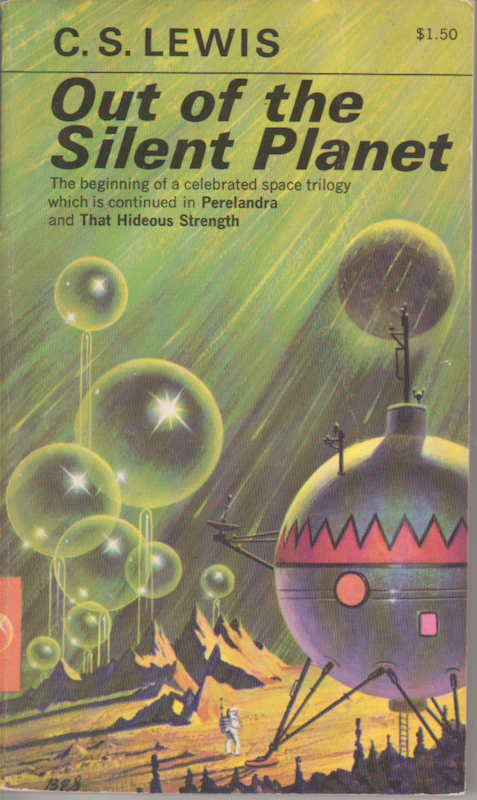
(Big side note: The cover of this book (at least on our copy) was totally, totally wrong for it.

The copy of the book that we have is old; it was published in 1965 and I honestly don't think whoever chose the cover for the book had even read it. "It's a space book!" they said. "We need to give it a space cover!" And then they went and found some generic sci-fi drawing on somebody's desk a couple of cubicles over and put it on this book.

This is the cover of our copy:


And here is the cover of a copy that I think suits the book much, much better:


Anyway, I feel better now that we've cleared all that up.)

Friday, August 24, 2012

Books I Love - Beyonders

Do you guys remember when I wrote a post last year entitled "Books I Want to Read this Summer?" (I know it might be hard to remember; it was like a year and a half ago.) Well I did, in fact, read those books. And I planned on writing blog posts on them. And…now it's been so long that another summer has passed and I've actually read their sequels. So! You are lucky enough to be able to read my reviews of the original books and the sequels. Woot!


Today I want to talk to you about Brandon Mull's series "Beyonders." In "Beyonders: A World Without Heroes," a regular boy named Jason is, through a crazy twist of fate, transported to a different world he's never had an inkling existed. People in this new world, though, know about us. Sometimes, like Jason, people from our world end up over there. They're called "Beyonders," because they're from the "Beyond" (our world). Jason learns that this world is almost entirely ruled by an evil lord named Maldor, and also stumbles upon the secret that Maldor can be destroyed by a magic word which brave adventurers have to collect syllable by syllable. He's joined by another beyonder named Rachel, and the two of them set out to find the entire word, destroy Maldor, and return home to our world.

I have to admit that when I read the first book in the series last year, I liked it, but I knew that I still liked Fablehaven more. Beyonders was good, but (I felt) lacking some of the originality of Fablehaven. It seemed to me to be a more typical/regular fantasy plot. With that being said, though, the writing was good, the characters were good, and the story was entertaining. It was a good book and I enjoyed it, and I was very interested to see where the series would go.

(Side note: Have any of you noticed that Brandon Mull seems to have some sort of fixation on betrayal? In Fablehaven, it was one of the major themes, and it's carried over into this story as well. Thoughts?)

Now that I've read the second book, "Beyonders: Seeds of Rebellion," I fully endorse the series as a "Books I Love" series. Brandon Mull is just so creative, and his creativity really shines through in this book. I won't tell you what happens, because I don't want to spoil anything, but the book is awesome. I thoroughly enjoyed it and I can't wait for the next one. (Which, by the way, comes out next March. Sigh. I wish books came out faster.  But I'm patient. Mostly.)

So, yeah! Beyonders is great. If you're looking for some fun books, definitely try them.

Wednesday, April 4, 2012

Revisiting The Hunger Games

It's been hard to miss that the movie The Hunger Games has recently come out in theaters. Jason and I haven't seen it yet, but I've heard back from several people who read the books and have now seen the movie that it's great, and follows the book exactly. Which, awesome! That's a relief, because book to movie transitions can be really tricky.

Because Jason and I are waiting to see it until it comes out in the dollar theater, I reread the books last week. I wanted to re-familiarize myself with them and also help myself remain patient while waiting to see the movie. Reading them again also prompted me to finally write this blog post, which I wanted to write the first time after I read Mockingjay, but never did.

Important note: If you have not read all three books of The Hunger Games and do not wish to know what happens, do not read this post. I am going to use details that will reveal the ending.


Everyone, it seems, loves the first book. Everybody likes the second, either more or less than the first. But the third book? Few people like the third book. Over and over when I've talked with people about the books, the consensus is the same: "No, I don't really like Mockingjay. I was disappointed. It isn't as good as the first two. It isn't a good book."

I disagree.

Mockingjay is not a happy book, but that does not mean I do not like it. It does not mean it is not good. When I think of Mockingjay, I do not feel happy. I do not smile. It does not bring me joy. It fills me with deep, powerful, sadness. I mourn for the loss of the people, friends, family members, who have been lost.  They are all dead, and I cannot bring them back. I mourn for the loss of sanity, the loss of wholeness, in the characters that remain. I mourn for their torn-apart world.

And that is exactly what Suzanne Collins wants.

Mockingjay is a good book because it is well written and it achieves its aims.

To substantiate this, we first need to define exactly what a "good book" is. What does a book need to be to be a "good book?" Does it need to be well known? Does it need to be popular? Does it need to be depressing? Does it need to be happy?  Does it need to be well written? Does it need to achieve its aims?

Let's take each point one by one.

"Does it need to be well known?" In my mind, this answer is clearly No. Say that some person lives as a hermit alongside a river in the middle of nowhere, and nobody knows who they are or that they even exist. And this hermit, out in the middle of nowhere, writes the best book ever. Really. It has everything - wonderful characters and character development, a great plot, perfect pacing, and a moving message that it is impossible not to take to heart. Is the book a bad book simply because it is not known, because no one knows it exists? No. It's still a good book. Simply because most people don't know it exists does not change that it is a good book. And so, we have to conclude that a book does not need to be well known to be good.

"Does it need to be popular?" Heck, no. Some of the most popular books are ones with very, very serious flaws (Twilight, anyone?). Just because it's popular does not mean it's well written. It means that it appeals to the masses in some way. I'm not saying all popular books are bad - that's obviously false as well. Many, many popular books are awesome. Harry Potter, for example, appeals to everyone and their grandma, and it's a great series. But we cannot use popularity as a barometer of "goodness."

"Does it need to be depressing?" My English teachers in high school certainly seemed to think so. Every single book we had to read - through all four years of high school - was depressing. The only exceptions I can think of were Huckleberry Finn (which was optional, so it doesn't even really count) and Catch 22 (which has some pretty depressing moments, though I do love it). Okay, it probably wasn't my English teachers' fault; it was whatever school board approved the required reading in our school district. They stunk. Anyway, sorry for the tangent about my long-held bitterness regarding the books we had to read during high school. What I'm really trying to get back to is that, no, books do not have to be depressing to be good. So many great books are hopeful, and uplifting, and good. Great plot, with good character development, and complex and thoughtful and intelligent stories. They end happily. And they are still good books.  So, no, books do not have to be depressing to be good.

"Does it need to be happy?" On the flip side, books do not need to be happy to be good books, either. Like I said, Catch 22 is an awesome book, but I wouldn't call it happy. Funny, yes. Fantastic, yes. But happy? No, I could not call it happy. Books do not have to be happy to be good.

"Does it need to be well written?" Now, this one I feel more confident saying yes, it has to be well written. The tricky thing here is that people will have different definitions of "well written." For the purposes of this discussion let's go with good characters and character development, good plot, good syntax, and good pacing/plot structure. I think a book has to have those things to be a "good book." If you're missing one or more of those things, you've got a problem.

"Does it need to achieve its aims?" Yes, I think so. If a book sets out with a message in mind, I think that it needs to convey that message clearly to its readers, especially if it wants its readers to act on that message. If it fails at its central purpose, then it must have some serious redeeming qualities to be considered a good book. But a book that sets out with a mission in mind, and then accomplishes that mission, is a good book.


So, does Mockingjay have the qualities that make it a good book? Well, yes, it does. First of all, it is well-written. The characters are believable, as is their progression throughout all of the events that take place. They grow, learn, develop, change. They are three-dimensional. The plot structure is good as well; it builds in an arc to the climax, with a suitable but not overlong after-climax, and does it all at a good pace. The diction and syntax are well-chosen and varied. And of course, the plot itself is gripping and interesting. Even those who dislike it must admit that it is skillfully written.

Secondly, does it achieve its aims? Does it get its message across? Well, Mockingjay has several messages. It explores the justification of war. What is okay in war? What isn't? Is it all worth it? It also forces the reader to compare themselves to the shallow, apathetic residents of the Capitol, and draw unwanted, unfavorable parallels with their own lives. Finally, its main point, the point that's absolutely central to the third book, is that war is terrible, and unpredictable, and bad things happen that you can't take back.

It achieves the first point - exploring the justification of acts of war - through Gale's story. In Mockingjay, he works with Beetee to create new, unprecedented weapons and traps against the Capitol. Katniss, upon learning of the traps - which take advantage of things like love and compassion - is sickened. From the book:

"'That seems to be crossing some kind of line,' I say. 'So anything goes?' They both stare at me -- Beetee with doubt, Gale with hostility. 'I guess there isn't a rule book for what might be acceptable to do to another human being.'

'Sure there is. Beetee and I have been following the same rule book President Snow used when he hijacked Peeta,' says Gale."

The problem is (and Katniss realizes this), is that the capitol is evil. When you follow the same rule book as them, you lose your humanity as well.

Later, Katniss witnesses the pain caused by Gale's strategies first hand, when the rebels eventually approve of and act on his plan to trap thousands of people inside the mountain fortress "the Nut." While discussing how to overcome the mountain, Gale says:


"'We don't need to control it if we give up the idea that we have to possess the Nut,' says Gale. 'Only shut it down.'

'So you're suggesting we start avalanches and block the entrances?' asks Lyme.

'That's it,' says Gale. 'Trap the enemy inside, cut off from supplies. Make it impossible for them to send out their hovercraft.'

While everyone considers the plan, Boggs flips through a stack of blueprints of the Nut and frowns. "You risk killing everyone inside. Look at the ventilation system. It's rudimentary at best. Nothing like what we have in Thirteen. It depends entirely on pumping in air from the mountainsides. Block those vents and you'll suffocate whoever is trapped.'

'They could still escape through the train tunnel to the square,' says Beetee.

'Not if we blow it up,' says Gale brusquely. His intent, his full intent, becomes clear. Glade has no interest in preserving the lives of those in the Nut. No interest in caging the prey for later use.

This is one of his death traps."

Katniss is horrified. Through the next chapter - in which the rebels carry out Gale's plan and kill almost everyone in the mountain - Katniss keeps thinking of back home, of the mine accident that killed her father and Gale's. Katniss has not lost the perspective that these are still human beings, people with emotions and lives and families like herself. Gale, however, has lost that. His hatred of the Capitol and those who support it has blinded him, has smothered the normal emotions of empathy and understanding and compassion. He only has hatred and cold, calculated cunning left. And he uses it.

At the very end of the book, the very worst thing that could happen to Katniss does. She watches as Prim, her beloved sister, dies. And the cruel irony of Prim's death? She is killed by one of the very traps that Gale designed to be used against the Capitol. It is used, without his knowledge or consent, to kill the sister of the girl he loves. Obviously, Katniss can never forget this, never forget who designed the trap that killed her sister. And both she and Gale know this. He leaves her, after apologizing and acknowledging that there is a divide between them that can never now be breached.

Do you think Gale has a happy life? Do you think the horror of what he did in the war ever fully rests upon him? Maybe. Maybe not. But it is certainly something Suzanne Collins wishes us to consider.


A second message that began in the Hunger Games and continues in Mockingjay is the comparison that Collins forces the reader to make between themselves and the residents of the Capitol. It makes the reader question who they are more like - Katniss, the strong hero, or the Capitol residents, who are bathed in excess and do not realize how shallow their lives have become. They have an abundance of food, resources, and gizmos; they wile away their days with gossip and entertainment and silly parties. Meanwhile, the rest of the people in their world are suffering. In every district, people are hungry and dying and sick, unnoticed and uncared for by the people of the Capitol.

As you read, you think about your own life, and the people in the world that you are ignoring or forgetting about. Yes, you think, I have a comfortable home and lots of food and clothes. And yes, there are thousands, millions, billions of people in the world who are hungry, who are suffering, who live under oppressive and cruel governments. And I am doing nothing…

Unwillingly, you are forced to come to the conclusion that you are more like a resident of the Capitol than of the districts. You are not starving; you are living in excess. The things you buy that are cheap are cheap because they are made in poor conditions by people paid too little on the other side of the world. And what are you doing to change that? Do you care? Or are you too concerned with yourself? Your appearance? What the celebrities are doing in Hollywood? The comparisons between ourselves and the Capitol residents are chilling, and impossible not to make. Yes, Collins successfully brings this point home.

Finally, the main point - that war is terrible, and unpredictable, and irreversible. Oh, how Suzanne Collins makes this point. Finnick dies. Prim dies. Cinna dies. Boggs dies. Rue dies. Madge dies. Portia dies. Thresh dies. Cecelia dies. Wiress dies. Mags dies. Countless others - in District 12, in District 8, in the Nut, across the whole country, in the Capitol - die. Annie loses her husband. Gale loses the girl that he loves. Peeta is tortured into insanity. Katniss loses her home. Her best friend. The boy she loves. Her sister. Everything.

If this book were like so many others - where the hero never questions the justification of their actions, where all the main characters somehow make it through intact, where the story takes a straightforward path and only minor endeavors fail - I think people would like it. But none of those things happen. Katniss questions the rebels and their leader, President Coin, because she sees unsettling similarities between them and the current cruel leaders. Katniss does not have a "clean" motivation to bring down the government; she's ruled by emotions such as hate and revenge that cloud her vision. Prim and Finnick and Cinna and so many others die. Peeta is tortured into insanity and has to battle his way back to his true personality. The plot isn't strictly linear, the battles aren't clean, and sometimes there's questionable tactics used against others. Katniss's last mission, which takes up the last third of the book, is a complete and utter failure. She doesn't accomplish her goal (assassinating President Snow) and several good characters die along the way, sacrificing their lives for…for what? Nothing. Their lives are wasted.

At the very beginning of Mockingjay, Katniss asks herself, "To become the Mockingjay…could any good I do possibly outweigh the damage?" And I think that is a central question of the book. Is this war just? Yes, absolutely. The people in the districts are being killed, tortured, enslaved. They need to overthrow the Capitol and start a new government. But does that mean this war will be any less terrible than any other? No.

So does the good that they achieve outweigh the damage of the war? If you look at it objectively, you have to answer yes. They free hundreds of thousands of people from slavery, abuse, and death. They create a new republic that will protect that freedom and allow people to live their lives as they wish and to have a chance of happiness.

But you, the reader, have slowly learned everything about Katniss Everdeen - her past, her family, her friends, her desperate desire to survive and to save all those that she loves. And you are haunted, tortured, when she does not succeed. You, who have been inside Katniss's head for three books, who like and care about her, Peeta, Prim, Haymitch, and everyone else, do not look at it objectively. You care about the individual cost the war extracts. Who cares that it is almost a statistical impossibility that everyone you care about will live through the war? You want them to. And when they die, one by one, you care. You care when Finnick dies and his wife Annie is left a widow. You care when Peeta is tortured into insanity. You care when Gale crosses invisible lines of humanity and kills thousands of people. You care when Katniss watches Prim burst into flame and die. You are not reading objectively. And when everyone you care about is dead, or insane, or severely traumatized and depressed, you will not be happy.


So why don't people like Mockingjay? Because of all the bad things that happen and all the people that die. But what did Suzanne Collins need to do to get her point across that war is truly terrible? Have a lot of bad things happen and have a lot of people die. So, it was really inevitable that most people were not going to like Mockingjay. Its fundamental message was always going to go against what readers wanted out of it. They wanted a war that was terrible, but not that terrible. They expected characters to die, but not those characters. They knew that people can be psychologically broken by war, but not Katniss. Her life couldn't be destroyed. She couldn't get post-traumatic stress disorder. Not her.

And that's Suzanne Collins' point. She wanted to get the message across that war is crazy and unexpected and terrible. People die that you don't want to. Things happen that you wish never did. Even if a war is just and needs to be fought, as the one against the Capitol certainly did, it is still terrible.

Before Mockingjay was published, Suzanne Collin's editor read the book (obviously). When she reached the moment where Prim is killed, she cried out in despair and called Suzanne. From the New York Times article describing the moment:

"'No!' Stimola wailed. 'Don't do it.'

She was reacting as a reader, not a career adviser. but perhaps in the back of her mind she was imagining the emotions the plot twist might provoke in the book's youthful fans: depression rather than inspiration, desolation rather than triumph.

'Oh, but it has to be,' Collins told her. Stimola, paraphrasing, recalled the explanation Collins offered her over the phone: 'This is not a fairy tale; it's a war, and in war, there are tragic losses that must be mourned.'"

And, as much as the reader hates it, that's the truth.

So, is Mockingjay a good book? Yes. It is well written, and it gets the message across that it set out to spread. It is not a happy book. It is a book that puts you through the wringer, distresses you, makes you feel like you are losing people you care about. People do not like Mockingjay because they do not like those feelings. But don't shoot the messenger. Focus on the message.